The Pandemic Academic Year
As we end the 2020–21 academic year, we’re still pondering the impact of RNA research on the pandemic that is changing the world we live in. As RNA scientists, we applaud the mRNA vaccine development and how scientists pivoted their research to contribute to SARS-CoV-2 and COVID-19 research. These extraordinary scientific achievements and the pandemic are also revealing deep social justice issues, and we are thrilled by the recent announcement that a billion doses of COVID-19 mRNA vaccines will be made available to the world for free. Together, the RNA scientific community is saving millions of lives.
Closer to home, this year has also been an unexpected opportunity to further strengthen our local, national, and international outreach. We offered 17 one-hour Zoom webinars, our RNA Innovation Seminar Series, where RNA scientists presented their latest work on a broad range of topics, from foundational biology to potential therapeutics. These seminars fostered new insights and synergies for potential collaborations. Our members were given the opportunity to meet individually with these presenters and explore possible partnerships.
Shifting from an in-person to a virtual format, we invited more international speakers and expanded our reach to a non-UM attendance. Our seminars were attended on average by over 70 participants, over half of them being non-UM affiliates. They were faculty (average 23), postdoctoral fellows (average 23), students (average 18), and a few other stakeholders (average 7) who engaged through Q&A and chat.
The speakers were selected based on their research topics to balance the range of science presented in the series. Part of the mission of the Center is to hire Biosciences Initiative-supported RNA faculty, and the seminars were an effective way to connect with potential candidates. In keeping with the University and Center’s values, Diversity, Equity and Inclusion (DEI) was an important consideration in the speaker selection process. The presenters were introduced and selected by our co-directors and executive committee members.
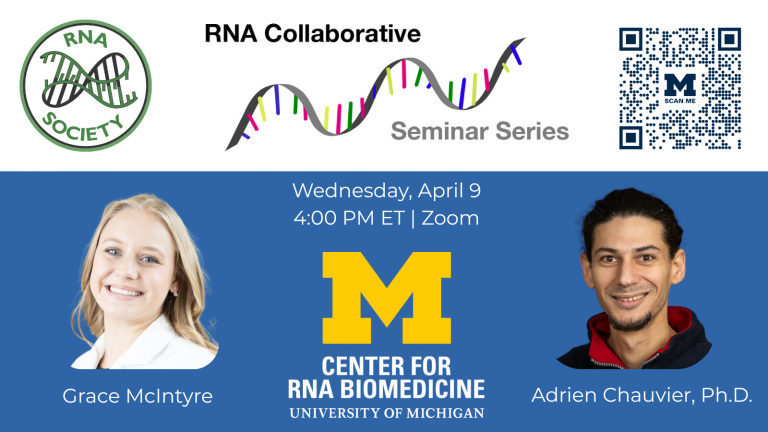
We also launched and contributed to the RNA Collaborative Seminar Series. We hosted three such webinars, including a presentation by Melissa Moore, Chief Scientific Officer at Moderna Therapeutics who explained the incredibly fast timeline for the development of the mRNA vaccine. Dr. Moore’s presentation was attended by over 1,500 participants.
In March 2021, our two-day annual symposium was also held virtually and attracted over 550 participants from all over the world except Antarctica, and in about the same proportions as our webinars. Five high profile RNA scientists gave keynote presentations, junior scientists offered Data Blitz talks, and a panel discussion provided professional advice to junior and senior scientists alike. The RNA community was once again very engaged, supportive of each other and demonstrating a collegial attitude.
We were pleased to be able to offer these events free of charge and to open them to the broader public and our friends across the world. We are also very grateful for the impeccable technical support provided by LSA Instructional Support Services.
As we rejoice to see again the in-person smiles we so missed, we are also celebrating the creativity and innovation that the necessary virtual format and social distancing brought about so that RNA research could continue undeterred and at a level perhaps never reached before. After all, “necessity is the mother of invention.” The RNA discovery breakthroughs are coming ever faster and continue to sustain our passion for RNA research that contributes to a better world.