
LSA researcher Monica Dus named White House Fellow
A University of Michigan researcher has been appointed a 2023-24 White House Fellow.
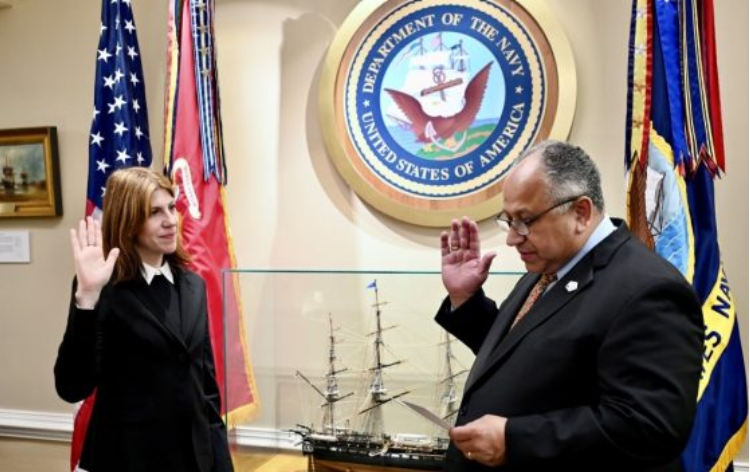
Monica Dus, associate professor of molecular, cellular and developmental biology in LSA, was chosen through a highly competitive selection process for her efforts in communicating science to the public. Dus was placed with the Department of the Navy.
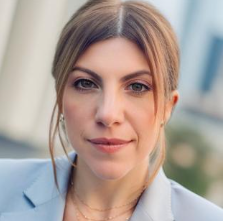
“I am so honored and humbled to be a White House Fellow. I’m particularly thrilled to be at the Department of the Navy with Secretary Carlos Del Toro, also an alumnus of the program,” Dus said.
Founded in 1964 by Lyndon B. Johnson, the White House Fellows program is one of America’s most prestigious programs for leadership and public service. White House Fellowships offer emerging leaders firsthand experience working at the highest levels of the federal government.
MORE INFORMATION
Dus leads a laboratory that studies the interplay between food and genes. Her lab conducts research on how dietary components interact with genes to shape taste function and feeding behavior and influence the risk of metabolic and neural diseases.
Dus also has been actively involved in science communication and public engagement, including a U-M Public Engagement Faculty Fellowship. Dus worked with the Museum of Natural History to publish “SugarBuzz,” a children’s comic book about food and the brain; hosts her own science podcasts (“How to Science and Neuroepic”), supported by LSA; and writes about science for the public in The Conversation.
Dus’ scholarly and science communication work has been recognized with awards such as the Guggenheim Fellowship, Sloan Research Fellowship, National Institutes of Health New Innovator Award and National Science Foundation CAREER Award.
White House Fellows typically spend a year working as a full-time, paid fellow to senior White House staff, cabinet secretaries and other top-ranking government officials. They also participate in an education program consisting of roundtable discussions with leaders from the private and public sectors, and potential trips to study U.S. policy in action both domestically and internationally.
Fellowships are awarded on a strictly nonpartisan basis, according to the program.
Over the next year, Dus will learn leadership and work on a portfolio that includes enhancing and innovating higher education, science and technology. She said she learned about the White House Fellows program at the height of the COVID-19 pandemic, when she found herself musing about science and its communication.
“I was teaching 450 students molecular genetics through a computer screen. I was learning about COVID through preprints and Twitter threads, and on a cold spring day, I let science protect me through a vaccine developed and supplied at incredible speed thanks to decades of publicly funded research and logistics,” she said.
“The hope that comes with science was illuminating the world; I, however, did not feel hopeful. Despite the profound and unprecedented relevance of science to society, its products protecting people one arm at a time, science was not winning hearts.”
Dus said that for her sabbatical, she felt the need to step outside of academia to expand her worldview.
“That’s when I serendipitously discovered the White House Fellowship from a National Academy of Sciences email,” she said. “It was a call for scientists to serve the country for one year while learning about the unique challenges and opportunities of its complex systems.
“I am certain that the experiences and connections of the fellowship and my placement will catalyze my personal and professional growth, and support my dream of bringing science into people’s hearts.”
Dus said she was grateful for all the support she received from the LSA administration and her department during the application process.
Notable White House Fellowship alumni include award-winning presidential historian Doris Kearns Goodwin, CNN’s Sanjay Gupta, and former U.S. Secretary of State Gen. Colin Powell.