
Dr. Michelle Hastings New Director of the M-RNA Therapeutics Initiative at The Center for RNA Biomedicine

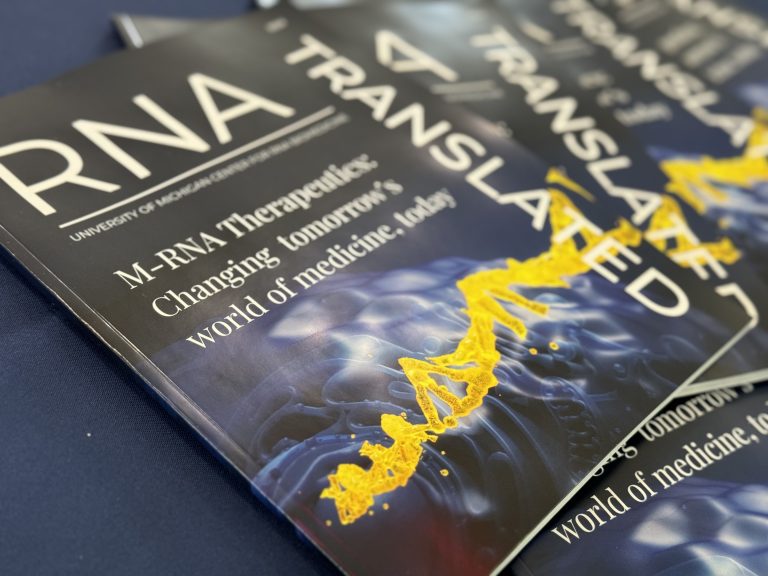
We are thrilled to announce that Dr. Michelle Hastings has joined us as a faculty member in the Department of Pharmacology, and Director of the M-RNA Therapeutics Initiative at The Center for RNA Biomedicine. Dr. Hastings will lead one of the largest teams of RNA scientists in the world, as Director of M-RNA Therapeutics within the Center for RNA Biomedicine at the University of Michigan.
M-RNA Therapeutics Initiative
The new RNA Therapeutics Initiative will bridge the gap between foundational RNA research discoveries at the University of Michigan, and the development of medicines to cure genetic, infectious and other diseases — a true “bedside to bench to bedside” pipeline. With Dr. Hastings’ expertise in not only the design and discovery phases of RNA therapeutics — her specialty — but also navigating the long road of getting these discoveries into the clinic, clinical trials, and helping with intellectual property (IP) and licensing issues, she will play a vital role in easing the current bottleneck to make the journey from the lab to the patient a more streamlined, seamless process. Dr. Hastings emphasizes that essentially her goal is “getting more scientists involved and getting these discoveries to the place where they are actually helping people.”
Potential for Rapid Development of RNA Therapeutics
Traditionally, it has been a lengthy process in the world of drug and vaccine development, involving massive drug companies spending years in clinical trials, mired in red tape. What’s so groundbreaking about RNA Therapeutics is that it has the potential to work much differently. As Dr. Hastings points out, “… the reason it’s so important right now is that because of what we’ve seen with the mRNA [Covid 19 SARS-CoV-2] vaccine and a lot of other drugs that are coming up right now, it can be done fairly rapidly once a targeted approach is identified. As an information drug, RNA can be designed in a very specific way, often relatively quickly, and it can be made in a very personalized manner.”
RNA Therapeutics Front and Center at Michigan
Dr. Hastings’ appointment is instrumental for transforming objectives that lie at the core of the Center’s mission into reality: encouraging a synergic community and empowering collaborations between RNA researchers to help streamline the discovery of novel, individualized disease targets; and establishing a system of in-house RNA production that would enable U-M investigators to produce and screen therapeutics rapidly and cost-effectively.
Dr. Hastings envisions that M-RNA Therapeutics will play a critical part in helping to remove some of the constraints that come from industry partnerships, facilitate faster development of life-saving therapies, and allow U-M investigators to generate therapies, i.e. drugs, vaccines, etc., for a much larger portfolio of diseases (including rare and orphan diseases) – essentially launching the U-M as a powerhouse of personalized medicine of the 21st century. She relates, “I’m excited to join the Center for RNA Biomedicine and direct this new RNA therapeutics initiative working with the incredible minds at U-M.”