Collaboration is Key at Upcoming RNA Symposium (Michigan Medicine Headlines)

Michigan Medicine faculty and staff will soon have the opportunity to learn more about one of the newest — and most innovative — fields of medical research.

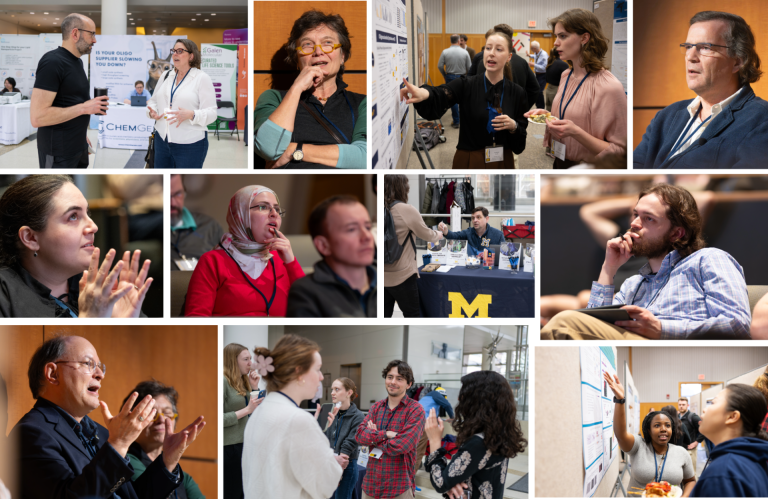
The second annual U-M Center for RNA Biomedicine symposium takes place on Friday, March 31 at various sites across campus. It will draw national leaders from the scientific, medical and engineering communities to focus on “RNA in precision medicine.”

The overall aim of the symposium is to spur collaboration across disciplines, which fits in seamlessly with the goal of the U-M Center for RNA Biomedicine, which was created in 2015.

The center is comprised of 144 faculty members, 70 percent of whom come from the U-M Medical School, with the rest coming from the U-M Department of Chemistry or the School of Public Health. All members work in fields that focus on RNA — the molecule present in every cell that helps decode and express an individual’s genes.

“Researchers tend to be in their own silos as they work in the lab,” said Nils Walter, Ph.D., professor of biological chemistry and co-director of the RNA Center for Biomedicine. The other director is Mats Ljungman, Ph.D., professor of radiation oncology.

“The findings somebody discovers in one lab is not always accessible to the researcher right down the hall,” Walter said. “So we try to help further the university’s initiative of tearing down those silos and bring experts together from all parts of campus — and all parts of the world.”

The symposium, which will be highlighted by five keynote addresses throughout the day, is just one way the center spurs collaboration.

It also holds seminars on campus every two weeks where researchers can share progress of their ongoing inquiries and funds pilot research grants that require two or more participants.

“Collaboration is so important,” Ljungman said. “Whether you bring the perspective of someone directly involved in RNA research or the perspective of someone in clinical and patient care — every viewpoint is critical to the understanding of science and the understanding of what a patient ultimately needs.”

If you are interested in attending the upcoming symposium, click here to register.
Read full article

Similar Posts

  • 2015-2016 RNA Seminars

    June 30, 2016: Palmer Commons, Fourth Floor Forum Hall – Edgar Otto : “Microfluidic droplet generation technology (Drop-Seq) enables high-throughput single cell transcriptomics” and Peter Freddolino : “The logic of transcriptional regulation in bacteria: From molecules to cells” June 23, 2016: Palmer Commons, Fourth Floor Forum Hall – John Moran : “Studies of a Human Retrotransposon” and Eric Fearon: “Working toward improved mouse models of somatic tissue mosaicism and cancer development” June…

  • |

    U-M study sheds light on how bacteria control their detoxification

    By Morgan Sherburne, Michigan News Bacteria need to constantly adapt to compete against other species for nutrient sources and to survive against threats such as antibiotics and toxins. In an effort to understand how bacteria control and regulate this adaptation, University of Michigan researchers from the Center for RNA Biomedicine are examining how RNA polymerase—the…

  • RNA Translated 2024 is out in wide release!

    The latest issue of RNA Translated, the University of Michigan Center for RNA Biomedicine annual magazine and brief report, has been published and is available in print and to view online now!   The 2024 issue focuses on our groundbreaking efforts to build a University of Michigan “M-RNA Therapeutics” initiative, led by Michelle Hastings, Ph.D.,…

  • |

    Redefining long non-coding RNAs (lncRNAs) to study transposons in plants

    Long non-coding RNAs (lncRNAs) constitute the new frontier of investigation for molecular biologists. However, lncRNA is inconsistently defined, which fails the research community in several ways. In a scientific review [2], Professor Andrzej Wierzbicki from the University of Michigan, Department of Molecular, Cellular and Developmental Biology, and collaborators challenge the contemporary ways of understanding lncRNAs…

  • |

    Dus and Wilinski publish significant discovery in insulin synthesis in Nature Structural & Molecular Biology

    The discovery of insulin has saved the lives of millions of people with diabetes worldwide, but little is known about the first step of insulin synthesis. Researchers at the University of Michigan have uncovered part of this mystery. Examining messenger RNAs involved in the production of insulin in fruit flies, they found that a chemical…

  • Kevin Weeks, Ph.D. – Keynote speaker, 2021 RNA Symposium

    KEYNOTE SPEAKER 2: March 25, 2021, 12:10–1:05 pm More information on the Symposium Blog by MiSciWriters “Structure-based discovery of new functions in large RNAs” Kevin Weeks, Ph.D. Kenan Distinguished Professor of Chemistry Chemistry, University of North Carolina The Kevin Weeks Lab TALK ABSTRACT The functions of many RNA molecules – including mRNAs, long non-coding RNAs,…